

Blog · Relocation
Moving from Dallas to the Carolinas: What to Know
A straight-numbers look at the move from Dallas to the Carolinas: what the same money buys in Charlotte and the Upstate, how the taxes and the weather change, and how to make the long-distance move go smoothly.
2026-10-04 · 8 min read
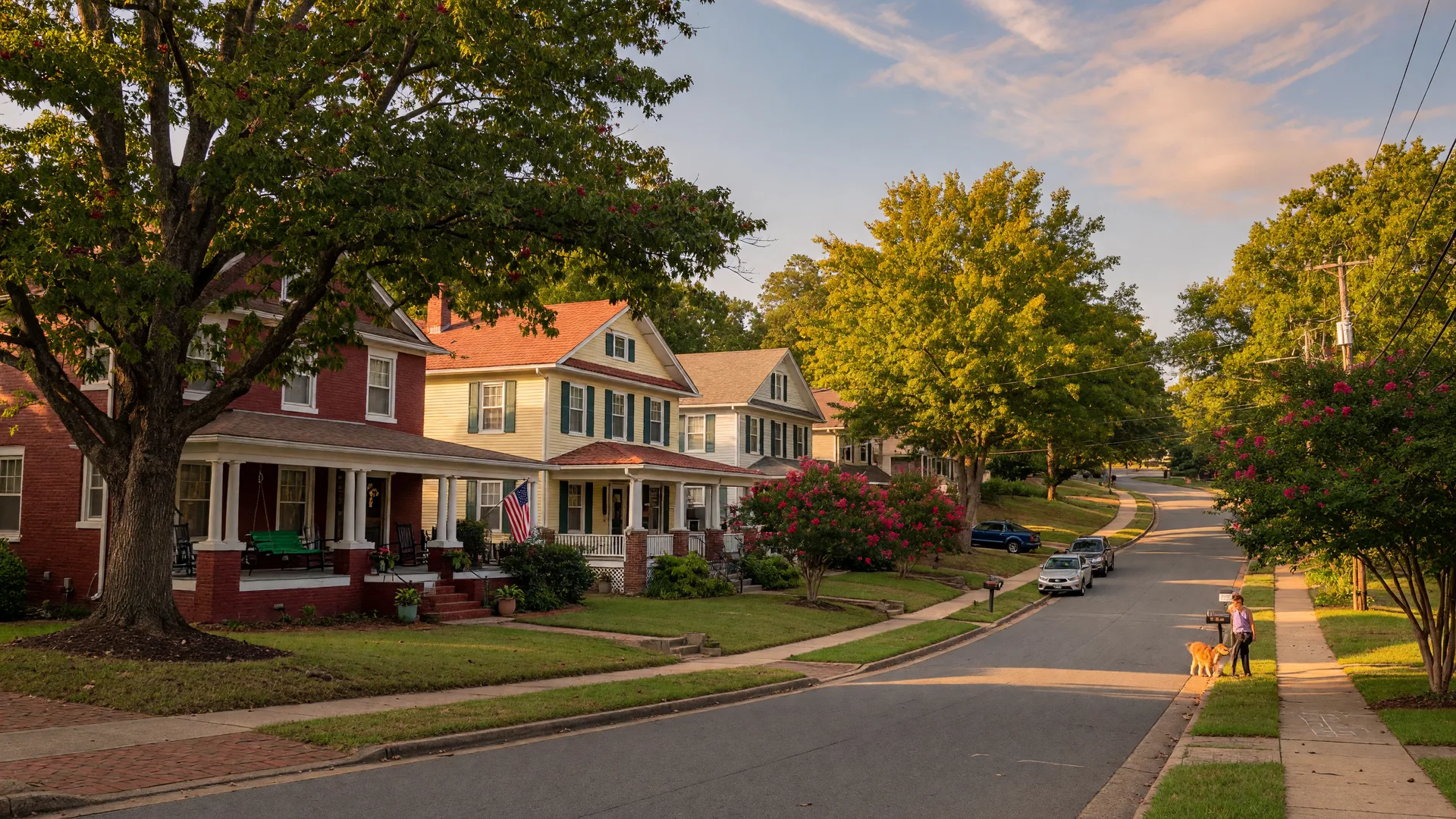
Dallas and the Carolinas are both big, humid, car-friendly Southern markets, but the numbers that change your monthly budget land differently in each. I sell Dallas homes in 14 days or less, and I have helped clients on both ends of moves like this, so here is the straight read on the Charlotte metro and the Upstate of South Carolina, no hype attached.
Cost of living: Charlotte runs a little cheaper than Dallas
Most comparisons put Charlotte roughly 2 to 7 percent less expensive than Dallas overall, with the gap concentrated in housing. Charlotte's median home sale price sits around $425,000 to $430,000, while Dallas runs closer to $445,000 to $450,000, so the same budget buys a little more house across the border. The honest way to compare is monthly: mortgage, property tax, insurance, and the income-tax hit, all on one page, before you commit to a price range.
The tax math: no state income tax vs two Carolina rates
This is the trade-off that surprises most Dallas transplants. Texas has no state income tax, and that is real money every paycheck. North Carolina replaces it with a flat personal income tax that has been phasing down: 3.99 percent for 2026, down from 4.25 percent in 2025, with a statutory path to keep reducing, and a standard deduction of $12,750 for single filers and $25,500 for married couples. South Carolina runs a two-bracket system for 2026: 1.99 percent on taxable income under $30,000 and 5.21 percent at or above it, which works out close to a flat 5.21 percent with a credit for most filers.
The offset is property tax, and it is a meaningful one. North Carolina's effective property-tax rate on owner-occupied homes runs around 0.66 percent, South Carolina's around 0.49 percent, among the lowest in the country, while Texas sits higher, often in the 1.6 to 1.8 percent range and sometimes over 2 percent in Dallas County. For a $450,000 home, that spread is thousands of dollars a year in favor of either Carolina. The income tax is permanent, though, so run the whole monthly page before you decide, not just the property-tax line.
Climate: humid summers, more rain, and winters that stay mild
Dallas summers are brutal and long, with heat that lingers into October. The Carolinas are humid too, with Charlotte's July highs near 90 degrees, but the worst heat is concentrated in July and August rather than stretching for months, and winter lows stay near freezing rather than dropping far below it. Charlotte gets roughly 43 to 45 inches of rain a year versus about 39 in Dallas, and the Upstate of South Carolina is wetter still, around 46 to 51 inches, which is why the region stays so green.
Snow is rare in the Charlotte metro, about 2 inches a year, and lighter in the Upstate. The real daily change is humidity and rain, not ice. Budget for a home that handles moisture, good drainage, and a dehumidifier in the summer, and you will be fine.
The real estate market: lower property tax, similar price points, greener stock
The price points are closer than you might expect, with Charlotte running roughly 5 to 10 percent below Dallas. The bigger differences are taxes, lot sizes, and the housing stock. The Carolinas' lower effective property tax is a real monthly saving, and the region's stock leans toward brick ranches, craftsman homes, and front porches set among mature trees, a greener look than newer North Texas master-planned communities.
The lot-size and HOA picture varies a lot by town, so ask for specifics in writing before you make an offer. Fort Mill, South Carolina, sits about 20 miles south of Uptown Charlotte on I-77 and is known for top-rated schools and generally more house for the money than the North Carolina side. Huntersville, North Carolina, runs north of the city near Lake Norman with strong schools and a 20-to-25-minute commute in light traffic. Concord, in Cabarrus County along I-85, is home to Concord Mills and the Charlotte Motor Speedway area, with a slightly longer ride into town but strong highway access. If acreage and separation matter to you, say so explicitly and do not assume it, and check HOA fees and school assignments the same way you would across Dallas and Collin County.
Commute and lifestyle: still a car region, with a different rhythm
The Carolinas are a car market like Dallas, so your driving habits carry over. The Charlotte commute is built around I-77, the main north-south spine, and it is congested at rush hour. Fort Mill to Uptown Charlotte runs 25 to 35 minutes in light traffic and 40 to 60 minutes or more in rush hour, so where you live relative to your office matters more than the raw miles. The metro's average one-way commute is about 27 minutes, close to what many Dallas suburbs see.
The lifestyle is greener and more outdoors-forward: lakes, trails, and tree canopy are a bigger part of daily life than in North Texas, and the Blue Ridge escarpment sits a short drive west of the Upstate. If you are used to the flat, dry, event-heavy Dallas rhythm, give yourself an adjustment window for the humidity and the hills. Pick the area around your actual commute and your school plan, not a general "it is a great region."
Tips for a smooth long-distance move
A Dallas-to-Carolinas move is a solid two-day drive or a short flight, so the distance is manageable, but the details still need order. Here is the sequence that works:
- Get a licensed, insured mover and book early. Peak-season long-distance moves fill up, and last-minute quotes run higher.
- Run the full tax numbers before you commit: the North Carolina or South Carolina income tax lowers your take-home, and the property-tax offset only helps if you buy.
- Pick your town before you tour. Fort Mill, Huntersville, and Concord have different commutes, school patterns, and price points, and the right one depends on where you work.
- Use a local Carolinas agent for the buy side. Out-of-state buyers need someone who knows the I-77 commute lines, the HOA realities, and the school assignments, not a portal search.
- Coordinate closing dates on both ends so you are not paying two mortgages or landing in temporary housing. A gap of even a few weeks costs real money.
- Ask about lot size, HOA fees, and school assignments in writing before you make an offer, since those vary more across the Carolinas than across Dallas suburbs.
The bottom line
The Carolinas are more humid, rainier, and greener, with a state income tax instead of Texas's zero, but meaningfully lower property-tax bills that offset much of it. Prices run a little below Dallas, the housing stock is more established and tree-lined, and the daily life is still car-driven but more outdoors-forward. Neither region is better, they are just different, and the right choice is the one that fits your budget and your daily life. If you are selling in Dallas first, get the numbers on your home before you plan the move, because the equity you walk away with sets the whole Carolinas budget.
Meet your trusted agent in the Carolinas
Meet Michelle Mattison in the Charlotte metro
Michelle Mattison leads Mattison Realty Group with eXp Realty, serving the Charlotte metro, the Upstate of South Carolina, and select Georgia and Virginia markets. Enter your info to view her profile on this site and connect with her directly.
Selling your Dallas home before the move?
Book a free 30-minute call and get a written plan with the numbers laid out, so you know exactly what you are working with before you buy in the Carolinas.
Book your free 30-minute call