

Blog · Relocation
Moving from Dallas to South Florida: What to Know
A straight-numbers look at the move from Dallas to South Florida, across Miami, Fort Lauderdale, and Palm Beach: what the same money buys, how the taxes and the weather change, and how to make the long-distance move go smoothly.
2026-10-03 · 8 min read
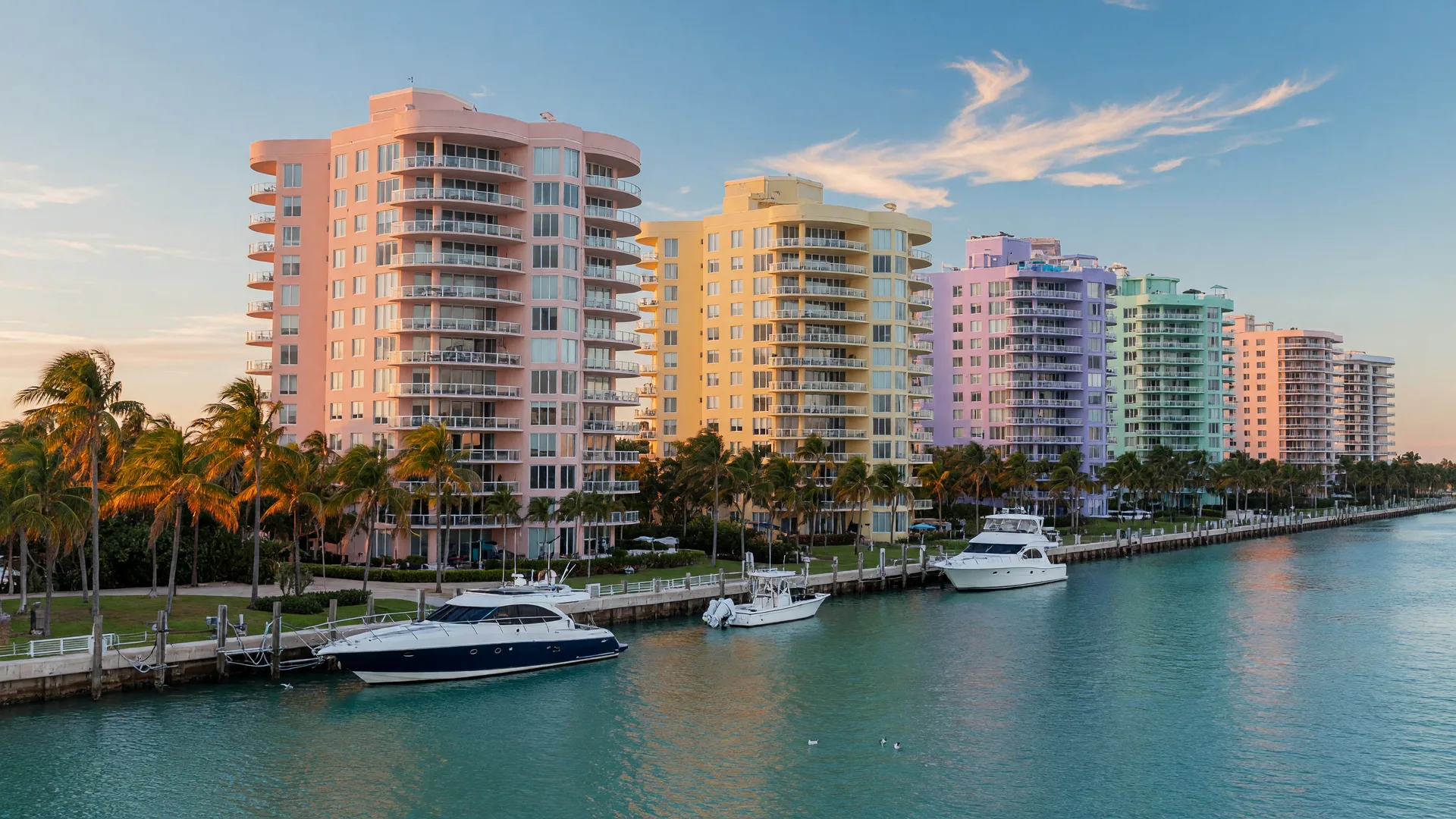
Dallas and South Florida are both hot, humid, car-friendly metros with no state income tax, but the numbers that change your monthly budget land differently in each. I sell Dallas homes in 14 days or less, and I have helped clients on both ends of moves like this, so here is the straight read on Miami, Fort Lauderdale, and Palm Beach, no hype attached.
Cost of living: South Florida runs higher, and housing is the gap
The overall cost of living in South Florida runs meaningfully above Dallas. Most comparisons put Miami roughly 10 to 21 percent more expensive than Dallas overall, with the biggest single gap in housing and rent. One-person rent averages around $2,100 a month in Miami versus about $1,450 in Dallas, and the purchase side follows the same curve. Fort Lauderdale and West Palm Beach are generally a bit cheaper than Miami, but they still run ahead of Dallas. If you are selling in Dallas and buying in South Florida, the equity you walk away with sets the whole budget, so get your Dallas number first.
The tax math: no income tax on both sides, but property tax flips
This one surprises most Dallas transplants in the opposite direction of other moves. Texas has no state income tax, and Florida has no state income tax either, so there is no income-tax hit on the move. The real difference is property tax, and it works in Florida's favor. Florida's effective property-tax rate on owner-occupied homes runs around 0.73 to 0.86 percent, while Texas sits higher, often 1.4 to 1.8 percent. On a $500,000 home, that is roughly $3,650 to $4,000 a year in Florida versus $7,000 to $8,000 in Texas.
Florida also adds a homestead exemption and the Save Our Homes cap, which limits how much the assessed value of an owner-occupied home can rise each year, a real shield against runaway tax bills. Sales tax is close on both sides: Florida's state rate is 6 percent with a combined average around 7 percent, versus Texas's 6.25 percent with a combined average around 8.2 percent. The honest way to compare is monthly: mortgage, property tax, insurance, and utilities, all on one page, before you commit to a price range.
Climate: hotter, more humid, and hurricanes are the real change
Dallas summers are brutal and long, with heat that lingers into October and peak temperatures that push past 100 degrees. South Florida is hot and humid all year, but its summer heat is different: the air is heavier, with afternoon humidity around 63 percent versus the low 40s in Dallas, and dew points in the 70s that make it feel sticky even when the thermometer is lower. The wet season from roughly May through October brings near-daily afternoon thunderstorms.
Winters are the pleasant surprise. South Florida stays warm year-round with no freezing, while Dallas gets genuine cold snaps. The trade-off is the hurricane season, which runs from June 1 to November 30. South Florida is a primary landfall zone, so flood risk and wind risk are part of the picture, and homeowners and flood insurance premiums run notably higher than in Dallas. Budget for that insurance line before you shop, because it is a real monthly cost that inland Texas buyers do not carry.
The real estate market: higher price points, waterfront premium, more condos
The price points run higher than Dallas and Collin County. Miami's median sale price sits around $560,000, Fort Lauderdale's median single-family home runs around $657,000, and West Palm Beach lands closer to $415,000 to $490,000 depending on the source. The broader tri-county metro median sits around $460,000 to $635,000 depending on how it is measured, and the luxury Palm Beach market itself saw the region's strongest price growth in recent years.
The stock is different from North Texas. South Florida leans heavily on condos and waterfront properties, with a large preconstruction and new-development pipeline in Miami, Fort Lauderdale, and Palm Beach. If you are used to a detached Dallas home on a lot, decide early whether a condo, a townhome, or a single-family home fits, because the price per square foot and the HOA and maintenance picture differ sharply between them. Waterfront carries a real premium, and views and exposure drive value in a way that does not exist in the flat, inland Dallas market.
Commute and lifestyle: still a car metro, with a waterfront rhythm
South Florida is a car metro like Dallas, so your driving habits carry over, but the geography is tighter and the water is everywhere. The tri-county corridor from Miami up through Fort Lauderdale to West Palm Beach is dense and coastal, so where you live relative to your office matters more than the raw miles. Miami, Brickell, and Edgewater carry the urban and waterfront energy, Coral Gables and Miami Beach bring their own character, and Fort Lauderdale and Palm Beach lean more suburban and family-oriented.
The lifestyle is greener, saltier, and more outdoors-forward: boating, beaches, and water sports are a bigger part of daily life than in North Texas. If you are used to the flat, dry, event-heavy Dallas rhythm, give yourself an adjustment window for the humidity and the coastal pace. Pick the neighborhood around your actual commute, your school plan, and whether you want condo or single-family living, not a general "it is a great area."
Tips for a smooth long-distance move
A Dallas-to-South Florida move is a solid two-day drive or a short flight, so the distance is manageable, but the details still need order. Here is the sequence that works:
- Get a licensed, insured mover and book early. Peak-season long-distance moves fill up, and last-minute quotes run higher.
- Price the insurance before you shop. Flood and wind coverage in South Florida is a real monthly line that inland Texas buyers do not carry.
- Use a local South Florida agent for the buy side. Out-of-town buyers need someone who knows the condo versus single-family math, the waterfront premium, and the preconstruction pipeline, not a portal search.
- Coordinate closing dates on both ends so you are not paying two mortgages or landing in temporary housing. A gap of even a few weeks costs real money.
- Ask about HOA fees, condo maintenance, flood zones, and insurance costs in writing before you make an offer, since those vary more across South Florida than across Dallas suburbs.
The bottom line
South Florida is hotter, more humid, and pricier on housing, with no income tax on either side but a meaningfully lower property-tax bill in Florida that offsets part of the cost gap. The real changes are the hurricane and flood insurance line, the condo-heavy stock, and the coastal, waterfront rhythm of daily life. Neither metro is better, they are just different, and the right choice is the one that fits your budget and your daily life. If you are selling in Dallas first, get the numbers on your home before you plan the move, because the equity you walk away with sets the whole South Florida budget.
Meet your trusted agent in South Florida
Meet Kelby Contreras in South Florida
Kelby Contreras is a Florida luxury real estate specialist serving Miami, Fort Lauderdale, and Palm Beach across Miami-Dade, Broward, and Palm Beach Counties. Enter your info to view his profile on this site and connect with him directly.
Selling your Dallas home before the move?
Book a free 30-minute call and get a written plan with the numbers laid out, so you know exactly what you are working with before you buy in South Florida.
Book your free 30-minute call