

Blog · Relocation
Moving from Dallas to San Antonio and the Texas Hill Country: What to Know
A straight-numbers look at the move from Dallas to San Antonio and the Hill Country towns of Spring Branch and Bulverde: what the same money buys, how the taxes and the weather change, and what well water and acreage actually mean for your budget.
2026-10-02 · 9 min read
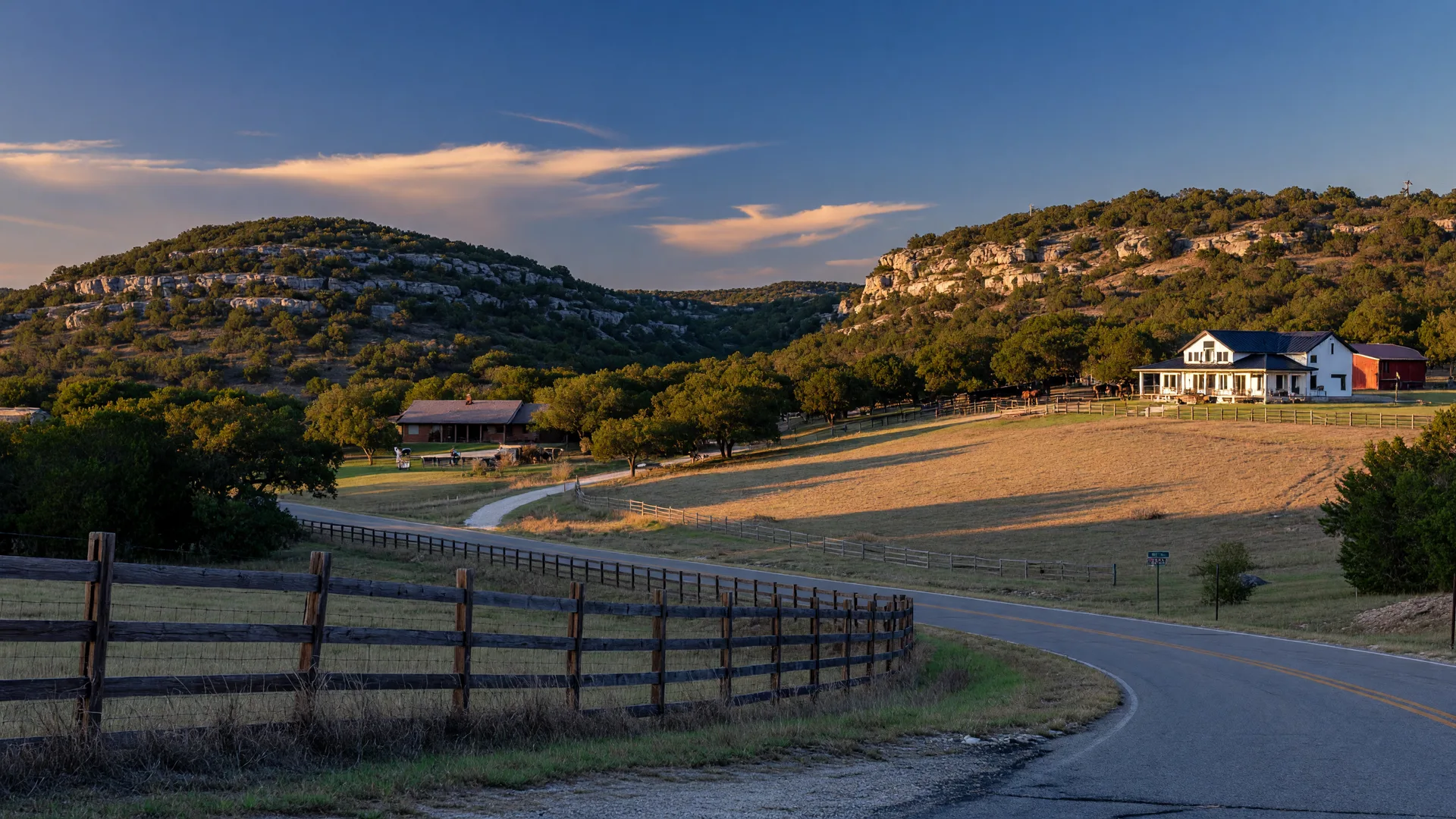
San Antonio and the Texas Hill Country are a different kind of Texas than Dallas. Both are in the same state, so the no-state-income-tax math carries over, but the housing, the taxes, the water, and the pace of life shift in ways that change your budget and your day-to-day. I sell Dallas homes in 14 days or less, and I have walked clients through moves like this on both ends, so here is the straight read on the move south, no hype attached.
Cost of living: San Antonio runs cheaper, and the gap is mostly housing
San Antonio is consistently the more affordable of the two metros. Most comparisons put it roughly 7 to 14 percent cheaper overall than Dallas, with the biggest gap in housing and utilities. Housing in San Antonio runs about 16 percent less than Dallas, and utilities run around 24 percent less, which is real money every month. Because both are in Texas, neither side has a state income tax, so that part of the ledger does not move, which is one reason the comparison stays straightforward.
The catch is where you buy. San Antonio proper is cheaper, but the Hill Country towns of Spring Branch and Bulverde in Comal County price higher than the city because you are buying acreage and views. The honest way to compare is monthly: mortgage, property tax, insurance, water, and the commute, all on one page, before you commit to a price range.
Climate: warmer winters, slightly drier, and essentially no snow
Both are humid subtropical, so the summers feel familiar, with July and August highs in the mid-90s. The real differences show up in winter and rain. Dallas averages around 39 inches of rain a year and occasionally sees light snow, while San Antonio runs closer to 33 inches and essentially never sees snow. Winters are milder in San Antonio, with January highs in the mid-60s versus the upper 50s in Dallas, which is a pleasant change if you are tired of the cold snaps.
The Hill Country is hillier and greener in its own way, with live oak and cedar instead of the flat, dry North Texas landscape. Budget for the heat you already know, plus a little more sun, and you will be fine.
The real estate market: similar prices in town, more for acreage in the country
The San Antonio metro median runs roughly $300,000 to $360,000, which is meaningfully below Dallas proper's near-$550,000 median. But Spring Branch and Bulverde sit above the city median, with typical home values around $400,000 and up, because the Hill Country trade is acreage. If your Dallas sale sets your budget, that equity goes further in San Antonio proper and buys land in Comal County, so get your Dallas number first.
The lot-size difference is the one to tour with an open mind. San Antonio proper is a conventional suburban market, while Spring Branch leans rural, with homes on larger acreage lots. Bulverde, along US 281, is more compact and subdivided, with closer access to newer neighborhoods and city utilities. If acreage and separation are the point of the move, say so explicitly and ask what the lot actually is before you fall for a photo.
Water and sewer: the biggest practical difference from Dallas
This is the one that surprises most Dallas transplants. In Dallas and Collin County, almost everything is on municipal water and sewer, so you never think about it. In the Hill Country, especially rural Spring Branch, the majority of homes run on a private groundwater well, typically 200 to 400 feet deep, and a septic system instead of city sewer. That is a whole set of costs and questions you do not have in Dallas.
Before you make an offer on a well-and-septic property, ask about well yield, the age and permit status of the septic system, and whether the property sits in the Edwards Aquifer recharge zone, which carries extra development rules. Hill Country water is also notably hard, so plan for water treatment and plumbing that handles it. Bulverde's more suburban subdivisions are closer to municipal utilities, which is a real convenience if you would rather not manage a well.
HOA and property tax: lighter HOAs, and a lower tax bill than Dallas County
Dallas County carries one of the highest property tax loads in Texas, with combined rates around 2.2 percent. Comal County runs lower, with effective rates around 1.0 to 1.4 percent depending on the property, and Bulverde and Spring Branch land in the low-to-mid 1 percent range. On a $400,000 home, that spread is thousands of dollars a year in your favor, which partly offsets the higher purchase price of acreage.
HOA reality flips the other way from what you may be used to. Dallas and Collin County are full of amenity-rich master-planned communities with real HOA fees. Hill Country acreage often has no HOA at all, or a much lighter one, which means more freedom and fewer rules, but also no one maintaining common areas or enforcing standards. If you are used to a managed community, ask specifically whether the property has an HOA and what it covers, because the answer varies a lot from lot to lot.
Commute and lifestyle: a quieter pace with a longer drive to work
Dallas is a big, sprawling, car-dependent metro with heavy rush-hour traffic across I-35, I-30, and the tollways, and an average commute around 27 minutes. The Hill Country is rural acreage country along US 281 and Highway 46 near Canyon Lake, with a much quieter pace: porches, pools, wineries, lakes, and outdoor living instead of the event-heavy North Texas rhythm.
The trade-off is jobs. The local Hill Country job market is limited, so most residents commute roughly 40 minutes into San Antonio or up to Austin for work. If you are retired, remote, or working in San Antonio, that trade is easy to make. If you need to be in an office daily, run the commute honestly before you commit, because the peace and quiet come with windshield time.
Tips for a smooth Dallas-to-Hill-Country move
A Dallas-to-San Antonio move is a manageable four-hour drive, so the logistics are easier than a cross-country move, but the differences in how homes work need order. Here is the sequence that works:
- Get your Dallas sale number first. The equity you walk away with sets the whole San Antonio budget, so sell before you shop if you can time it.
- Ask about water and sewer in writing before you offer: well yield, septic age and permit, and whether the lot sits in the Edwards Aquifer recharge zone.
- Compare property tax by property, not by county average. Comal County runs lower than Dallas County, but the exact rate depends on the lot and the school district.
- Confirm the school district. Spring Branch and Bulverde feed into Comal ISD, one of the fastest-growing districts in Texas, so verify the campus for the specific address.
- Use a local Hill Country agent for the buy side. Out-of-town buyers need someone who knows the well-and-septic realities, the HOA differences, and the commute lines, not a portal search.
- Coordinate closing dates on both ends so you are not paying two mortgages or landing in temporary housing. A gap of even a few weeks costs real money.
The bottom line
San Antonio is cheaper, slightly drier, and warmer in winter, with a lower property tax bill than Dallas County, and both sides skip the state income tax. The Hill Country buys you acreage, views, and a quieter pace, but brings well water, septic, and a longer commute to work. Neither is better, they are just different, and the right choice is the one that fits your budget and your daily life. If you are selling in Dallas first, get the numbers on your home before you plan the move, because the equity you walk away with sets the whole budget for the Hill Country.
Meet your trusted agent in San Antonio
Meet Patrick Kevin Fagan in San Antonio and the Hill Country
Patrick Kevin Fagan is a dual-licensed senior loan officer and Realtor with The Mortgage Patriot, serving San Antonio, Spring Branch, and Bulverde. Enter your info to view his profile on this site and connect with him directly.
Selling your Dallas home before the move?
Book a free 30-minute call and get a written plan with the numbers laid out, so you know exactly what you are working with before you buy in San Antonio or the Hill Country.
Book your free 30-minute call