

Blog · Relocation
Moving from Dallas to the North Shore of Boston: What to Know
A straight-numbers look at the move from Dallas to the North Shore of Massachusetts: what the same money buys, how the taxes and the weather change, and how to line up a long-distance move across state lines.
2026-10-04 · 8 min read
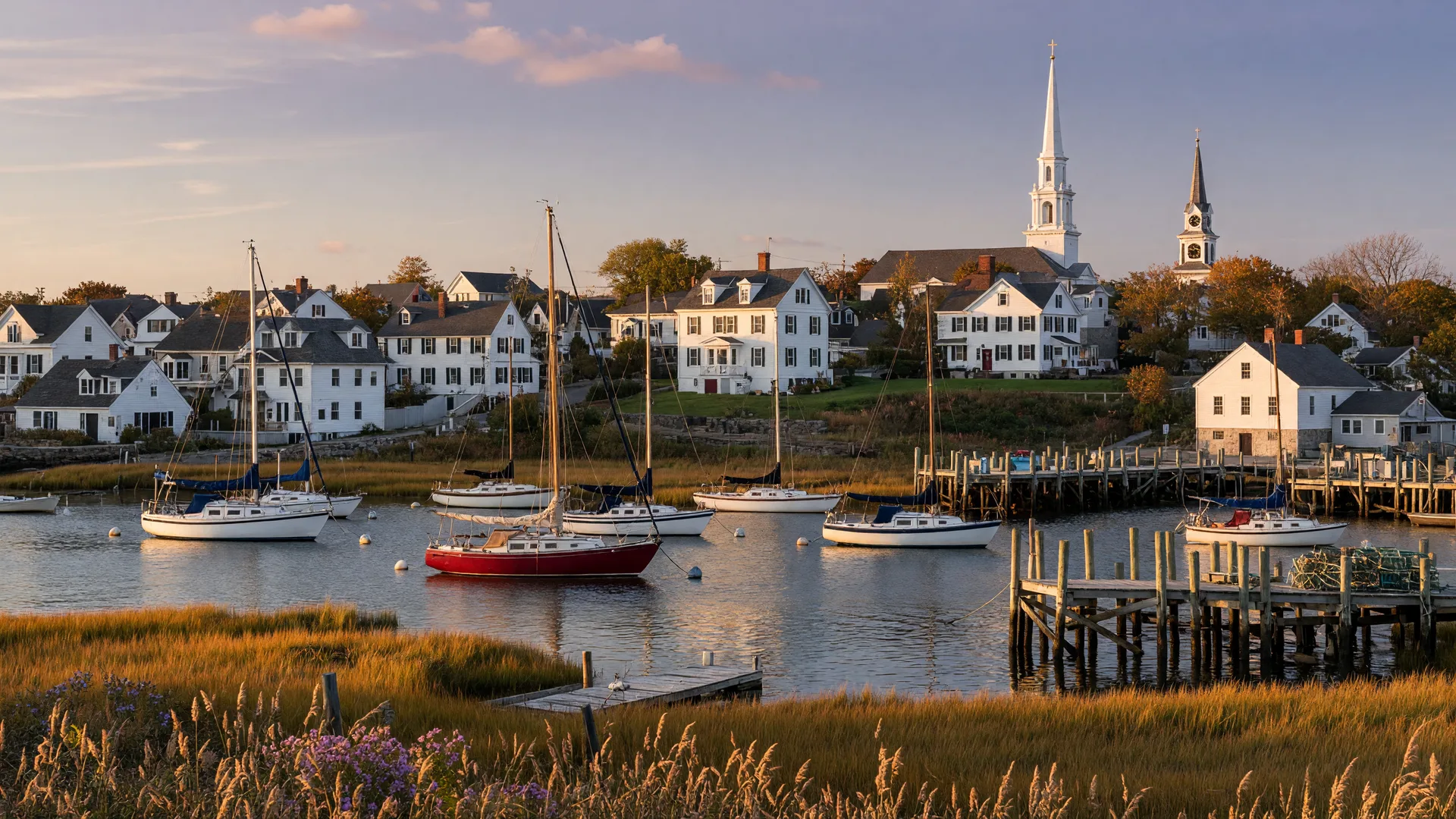
Dallas and the North Shore of Boston run on different money, different taxes, and very different weather. I sell Dallas homes in 14 days or less, and I help clients on both ends of moves like this, so here is the straight read on Essex County and the coastal towns north of Boston, no hype attached.
Cost of living: the North Shore is a premium coastal market
Essex County as a whole runs around a $698,000 median sale price, above Dallas and Collin County, and the coastal towns sit higher still. Ipswich runs around $775,000, Beverly around $773,000, Newburyport around $900,000, and Essex around $980,000, while Manchester-by-the-Sea pushes past $1.3 million. These are older, waterfront, and historic homes in small New England towns, and the market prices them accordingly.
For a Dallas family, the equity you walk away with sets the whole North Shore budget, so get your Dallas sale number first and compare it against the specific town, not the county median. A $500K Dallas sale that clears $200K in equity changes what you can afford in Ipswich or Beverly in a way that no general market stat captures.
The tax math: Massachusetts income tax is the headline, property tax is lighter than Texas
This is the adjustment that surprises most Dallas transplants. Texas has no state income tax, and that is real money every paycheck. Massachusetts replaces it with a flat 5 percent income tax on wages and most income, so budget for that hit on every check. High earners face an additional 4 percent surtax on income above roughly $1.08 million, but for most households the flat 5 percent is the number that matters.
Property tax is where Massachusetts actually runs lighter than Texas. The statewide effective rate lands around 1.0 to 1.15 percent, Essex County sits near 1.07 to 1.14 percent, and towns like Ipswich and Beverly land around 1.1 percent. DFW property tax is heavier, often 1.4 to 2.5 percent depending on the city and school district. The honest way to compare is monthly: mortgage, property tax, insurance, and the income-tax hit, all on one page, before you commit to a price range.
Climate: real winters and nor'easters, and a summer that does not punish you
Dallas summers are brutal and long. The North Shore is the opposite end of the spectrum: four real seasons, summers that stay mild with July highs near 82 degrees against Dallas's mid-90s, and winters that genuinely snow. The North Shore averages roughly 43 to 44 inches of snow a year against barely an inch or two in Dallas, and January highs near 36 degrees against Dallas's upper 50s.
The ocean is the weather wildcard. The Atlantic keeps the coastline cooler into late spring, warmer into early winter, and it fuels the nor'easters that can dump snow on the coast while inland towns stay lighter. For a Dallas transplant, the snow, the ice, and the wind are the real adjustment, not the heat. Budget for a winter wardrobe, a plan for clearing snow, and a home with good insulation and a reliable heating system.
The real estate market: coastal, historic, and town by town
The North Shore is not one market, it is a string of small towns with different characters, and knowing which one you are shopping matters more than the county average. Ipswich is river and marsh country with Crane Beach and a deep historic core. Beverly is a harbor city with commuter rail and a working waterfront. Gloucester is a genuine fishing port with a strong arts scene. Essex is a tiny antique-and-seafood town on the river. Amesbury sits on the Merrimack with mill-town bones. Salem mixes deep history with a fast commuter rail ride into Boston.
The housing stock is older than anything in DFW: 18th and 19th century colonials, capes, and saltboxes, plus well-built early-20th-century homes. That means lead-paint considerations on older homes, oil heat in places, septic systems outside town sewer lines, and flood-zone questions near the coast. None of it is a dealbreaker, but it is a different inspection and maintenance reality than a Dallas new build, and the age of the roof, furnace, and windows matters more in a New England winter.
Commute and lifestyle: a car-driven coast with Boston on the rail
The North Shore is a car region like Dallas, but the geography is different. Route 128 and I-95 ring the metro, and the commuter rail runs from Ipswich, Beverly, Salem, and Gloucester into Boston, which changes the math for anyone working in the city. The coastline, the rivers, and the small downtowns shape daily life more than raw miles, so where you live relative to your work matters more than it does on Dallas's flat grid.
The lifestyle is more outdoors-forward and more neighborhood-based: harbor walks, beaches, clam shacks, farmers markets, and a strong local food scene built around the water. Winters are long, so the quality of your neighborhood, your commute, and your house matters through January and February in a way it never does in North Texas. Pick the town around your actual commute and your school plan, not a general "it is a great area."
Tips for a smooth long-distance move
A Dallas-to-North Shore move is a two-day drive or a short flight, so the distance is manageable, but the details still need order. Here is the sequence that works:
- Get a licensed, insured mover and book early. Long-distance moves fill up in summer, and last-minute quotes run higher.
- Run the full tax numbers before you commit: the Massachusetts 5 percent income tax lowers your take-home every check, even though property tax runs lighter than DFW.
- Pick your town before you tour. Ipswich, Beverly, Gloucester, Amesbury, Essex, and Salem differ in price, commute, schools, and character more than most DFW suburbs do.
- Use a local agent on the buy side. Out-of-town buyers need someone who knows the coastal and historic stock, the flood zones, and the commuter rail towns, not a portal search.
- Coordinate closing dates on both ends so you are not paying two mortgages or landing in temporary housing. A gap of even a few weeks costs real money.
- Ask about lead paint, oil heat, septic, flood zone, and the roof on older North Shore homes, since a 19th-century colonial has a different maintenance reality than a Dallas new build, and winter makes failures urgent.
The bottom line
The North Shore of Boston is a premium coastal market with a 5 percent income tax, real winters, and historic housing stock, and the town you choose changes your numbers more than the county average ever will. Property tax runs lighter than DFW, which helps, but the income tax and the price bands are the real adjustments. Neither market is better, they are just different, and the right choice is the one that fits your budget and your daily life. If you are selling in Dallas first, get the numbers on your home before you plan the move, because the equity you walk away with sets the whole North Shore budget.
Meet your trusted agent on the North Shore
Meet The Militello Team in Essex County
The Militello Team is Joseph and Kathleen Militello, a husband-and-wife team with eXp Realty selling homes North of Boston across Ipswich, Beverly, Gloucester, Amesbury, Essex, Salem, and the surrounding Essex County towns. Enter your info to view their profile on this site and connect with them directly.
Selling your Dallas home before the move?
Book a free 30-minute call and get a written plan with the numbers laid out, so you know exactly what you are working with before you buy on the North Shore.
Book your free 30-minute call