

Blog · Relocation
Moving from Dallas to Houston: What to Know
A straight-numbers look at the move from Dallas to Houston: what the same money buys, how the taxes and the weather change, and the flood and hurricane questions every Houston buyer has to ask before they make an offer.
2026-10-04 · 8 min read
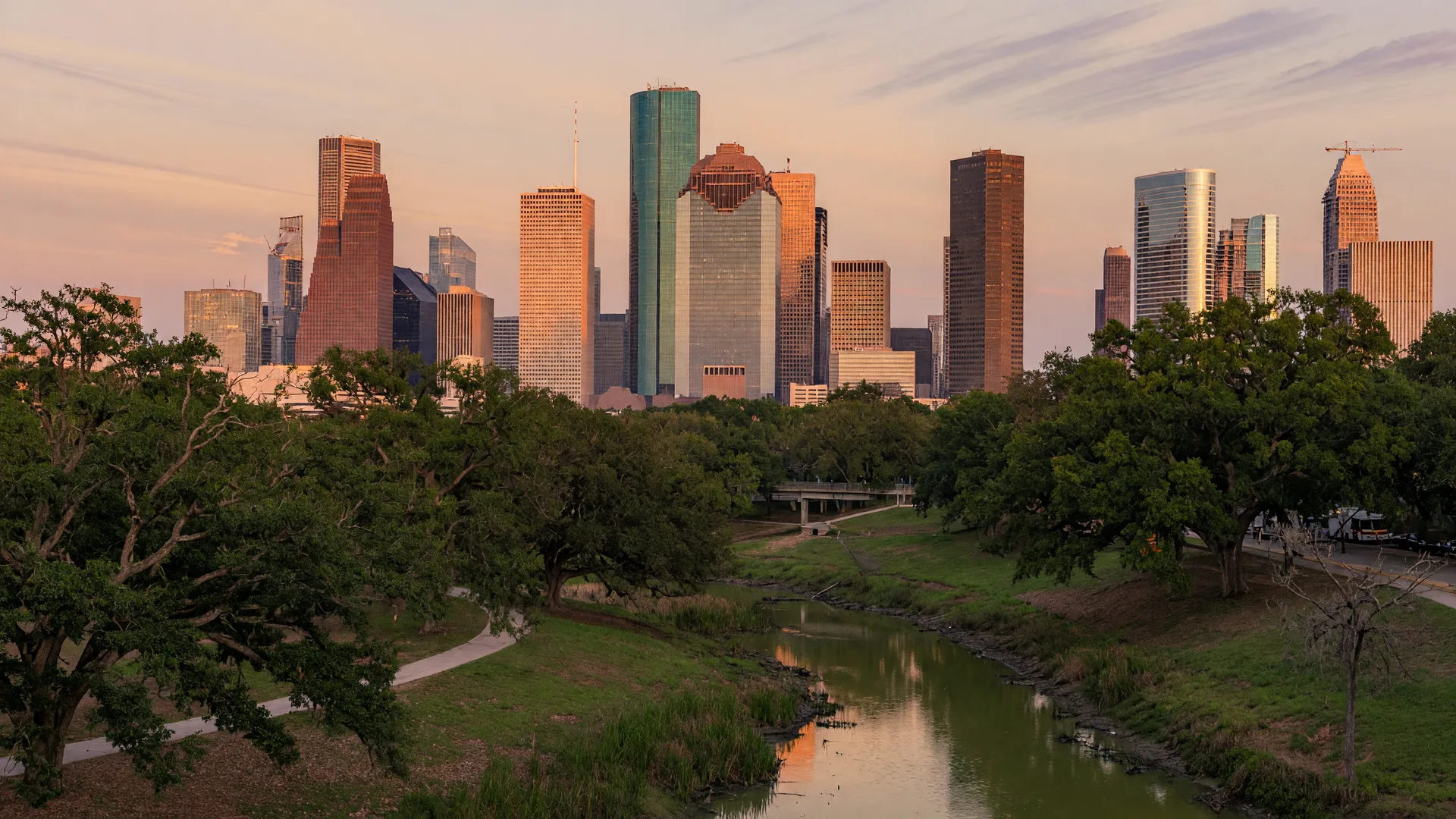
Dallas and Houston are the two big Texas metros, and they compare more closely than most people expect: no state income tax on either side, similar commute times, and a shared Texas heat. The real differences are in housing prices, humidity, and the flood and hurricane question that sits at the center of every Houston home search. I sell Dallas homes in 14 days or less, and my home market is Dallas and Collin County, so for the Houston side of this move I work with a trusted agent partner who lives that market. Here is the straight read on the move south, no hype attached.
Cost of living: Houston runs cheaper, and the gap is mostly housing
Houston is consistently the more affordable of the two metros. Most comparisons put it roughly 5 to 7 percent cheaper overall than Dallas, with the biggest gap in housing. Homes cost about 12 to 17 percent less in Houston, which is real money when you are financing it over 30 years. Because both are in Texas, neither side has a state income tax, so that part of the ledger does not move, which is one reason the comparison stays straightforward.
The honest way to compare is monthly: mortgage, property tax, insurance, flood insurance where it applies, utilities, and the commute, all on one page, before you commit to a price range. Houston's humidity also means a real air-conditioning bill in the summer, so budget for it like a North Texas summer with extra steps.
Climate: hotter, more humid, and hurricane season is real
Both are humid subtropical, so the summers feel familiar, with July and August highs in the mid-90s. The differences show up in rain and humidity. Houston sits about 50 miles from the Gulf Coast and averages around 53 inches of rain a year, versus roughly 39 inches in Dallas, and the humidity sits noticeably higher for more of the year. Winters are mild in both cities, with January highs in the 60s.
The big difference is hurricane season, which runs from June 1 through November 30. Houston lies in the Atlantic hurricane corridor, and the 2017 flood from Hurricane Harvey is the reference point every buyer should know: more than 60 inches of rain in places and tens of thousands of flooded homes. Dallas, about 240 miles inland, faces severe storms, hail, and the occasional tornado instead, with minimal hurricane risk. Neither city is weather-free, but the risk profile is genuinely different.
The real estate market: more house for the money, with a wider range
The Houston metro's typical sale price runs around $335,000, well below Dallas proper's near-$550K median, and the range across the metro is wide: entry-level suburbs, Katy's master-planned communities, and luxury homes in the Memorial and River Oaks areas. If your Dallas sale sets your budget, that equity goes further in Houston, so get your Dallas number first.
Katy, in particular, is a fast-growing master-planned market west of Houston with strong schools and a steady stream of new construction, which makes it a natural comparison for buyers coming from Collin County's planned communities. The Woodlands, north of the city, is the other big master-planned anchor. The right move depends on commute, schools, and flood history, which is exactly why a local agent matters more here than in most markets.
Property tax: slightly lower combined rates, but the bill follows the price
Both metros carry the high Texas property tax load, so this is not a tax haven versus a tax burden comparison. The combined rates run close: roughly 2.0 to 2.1 percent in Harris County versus about 2.2 percent in Dallas County. Because the median home price is lower in Houston, the typical annual bill comes in lower too, which partly offsets the flood-insurance question.
The honest comparison is by property, not by county average. The exact rate depends on the city, the school district, and the special districts, and it changes every year with the appraisal. Ask for the actual tax bill on the specific home, not a rate sheet, before you make an offer.
Flood risk: the question every Houston buyer must ask
This is the one that separates Houston from every other market in this comparison. Houston's flat coastal plain drains slowly, and heavy rain events can flood homes that are nowhere near a river. Flood risk varies block by block, so the questions are specific: Is the home in a FEMA flood zone? What does the flood insurance cost, and is it required? Has this property flooded before, in Harvey or any storm since? What does the seller's disclosure say?
Flood insurance is a real line item in the Houston budget, and it is separate from homeowners insurance. A home outside a mapped flood zone can still flood in a big rain event, so the honest approach is to check the flood history of the exact address and the neighborhood, not just the zone map. A local agent who has worked through these questions with buyers is worth their weight here, because the answer is never one-size-fits-all.
Commute and lifestyle: similar drive times, different daily rhythm
The commute math is nearly identical: average commute times run around 26 minutes in both metros, and both are car-dependent, sprawling, and event-heavy. The daily rhythm differs in flavor. Houston's identity is energy, medicine, and the port, with a world-class dining scene and the Space Center, while Dallas leans on finance, telecom, and corporate campuses. Both have pro sports, arts districts, and airport hubs.
The lifestyle trade is mostly weather-driven. Houston's humidity and rain mean more indoor and covered activities for more of the year, while Dallas gets more usable outdoor days. If you are moving for a job or family, the city itself will feel familiar: same Texas friendliness, same sprawl, same dependence on the car.
Tips for a smooth Dallas-to-Houston move
A Dallas-to-Houston move is a manageable four-hour drive down I-45, so the logistics are easier than a cross-country move, but the differences in how homes work need order. Here is the sequence that works:
- Get your Dallas sale number first. The equity you walk away with sets the whole Houston budget, so sell before you shop if you can time it.
- Ask the flood questions in writing before you offer: FEMA zone, flood insurance cost, prior flood history, and the seller's disclosure, for the exact address.
- Compare property tax by property, not by county average. Harris County runs close to Dallas County, but the exact rate depends on the city and the school district.
- Confirm the school district and the commute for the specific address. Katy and The Woodlands are built around their school systems, and the campus assignment varies by subdivision.
- Use a local Houston agent for the buy side. Out-of-town buyers need someone who knows the flood history, the master-planned communities, and the commute lines, not a portal search.
- Coordinate closing dates on both ends so you are not paying two mortgages or landing in temporary housing. A gap of even a few weeks costs real money.
The bottom line
Houston is cheaper, more humid, and rainier, with a slightly lower property tax bill and the same no-state-income-tax math, and it buys you more house for the money. The trade is the flood and hurricane question, which is manageable but only if you ask it properly on every property. Neither city is better, they are just different, and the right choice is the one that fits your budget and your daily life. If you are selling in Dallas first, get the numbers on your home before you plan the move, because the equity you walk away with sets the whole budget for Houston.
Meet your trusted agent in Houston
Meet Sharon Yeary in Greater Houston, Katy & DFW
Sharon Yeary is the Broker and Owner of Sharcom Realty, LLC, serving Greater Houston, Katy, and the Dallas-Fort Worth area. Enter your info to view her profile on this site and connect with her directly.
Selling your Dallas home before the move?
Book a free 30-minute call and get a written plan with the numbers laid out, so you know exactly what you are working with before you buy in Houston.
Book your free 30-minute call